She is the “solid pillar” of every architecture; perhaps for this reason, when the illusory doctrines surrounding the subject collapse, the crash is felt with such tremendous force.
At this point it becomes clear that the problem lies not in the structure built by the mother, but in the implicit infrastructural conditions that envelop her.
In many cases, the mother is alone in mediating between the visceral sense of care and protection developed toward the creature she has brought into being and, at the same time, the progressive loss of identity to which she is subjected.
The other—the intruder, the inescapable—forces her to perceive herself and the surrounding reality in completely renewed ways. An extreme mutation invades every area of her existence, involving body, perception, and psyche.
The emotional legacy that motherhood can stir is ambivalent: on one hand, one is crushed by the change it imposes, while on the other a powerful, inexplicable feeling develops toward the unborn child.
Small griefs wrap themselves around the organism as it tries to catch up with itself, to resemble itself from within, desperately attempting to hold onto the image of the self it possessed up to that moment.
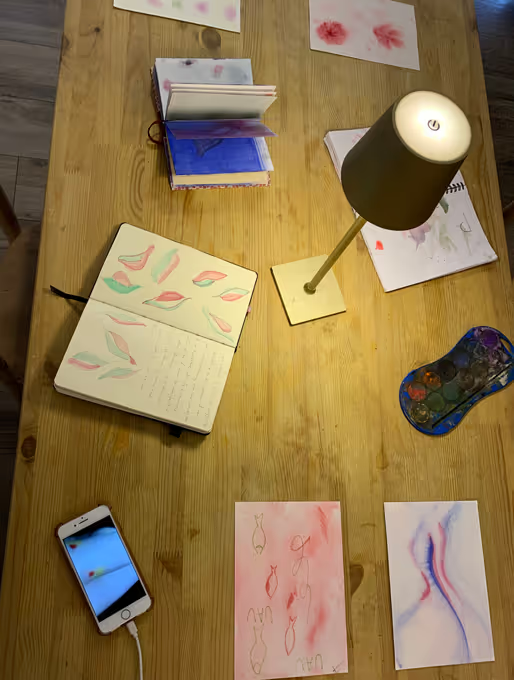
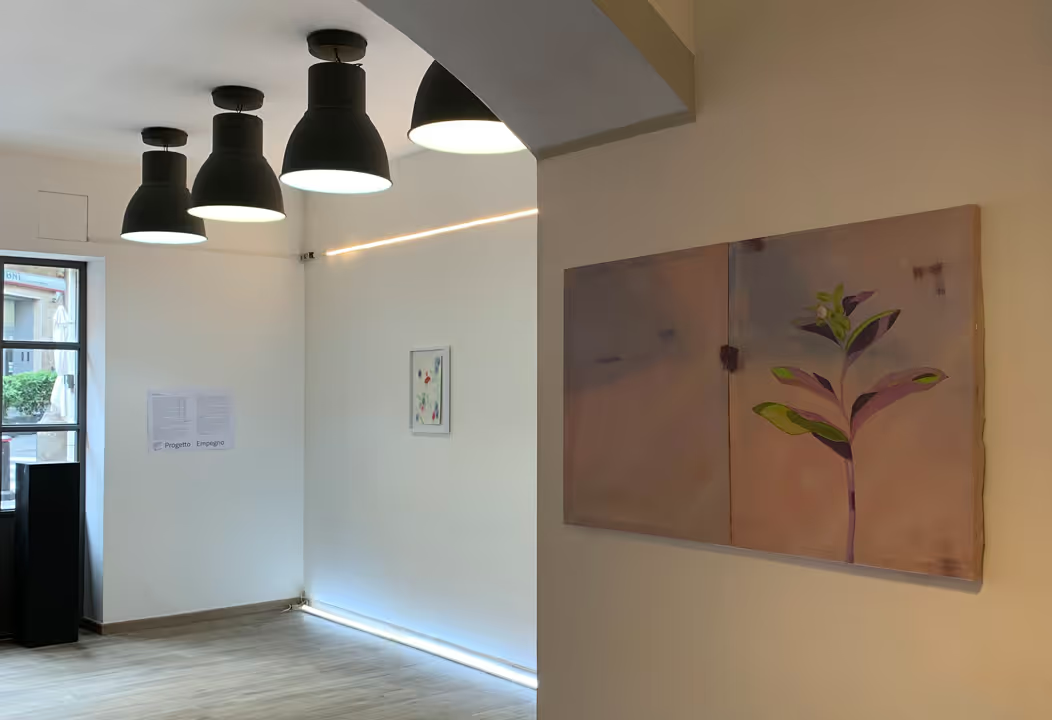
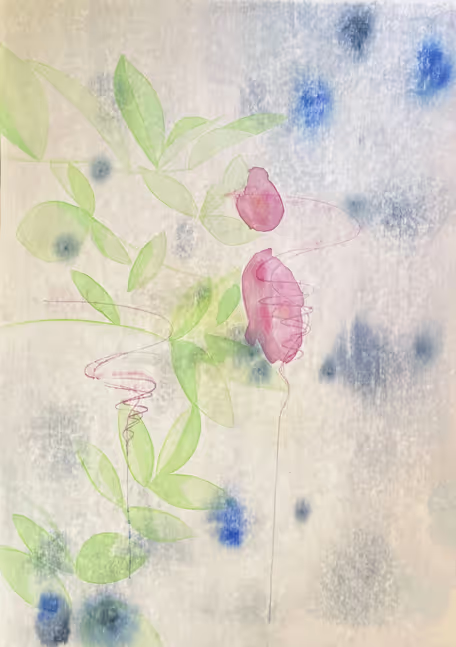
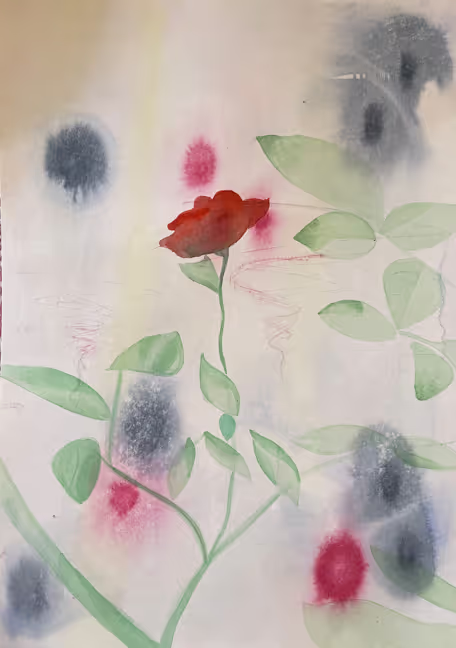
It is within this broad conceptual field that Serena Ciccone embraces fragility as a visual force —as a narrative coefficient capable of triggering a process that transforms frustration and anger into pivotal elements for building a renewed alphabet of gestures and emotions. The unspoken anger within motherhood—present and persistent—finds sublimation through the painterly device. Moreover, the element of play and the connection to the pre-linguistic phase, inherent in the artist’s production, become a metaphor for a working process constructed from fragmented time: from the need to produce and create in snatches of time, forced to mediate between an impetuous drive and concrete or physiological interruption.